Dinner · Raat jo Khado
Vanghar Batatay ja Salura
Aubergine and potato dry vegetable
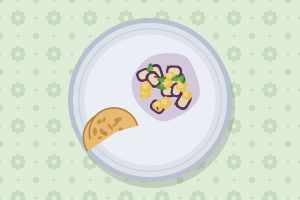
An everyday dry vegetable of potato and aubergine (vanghar) tempered with mustard seeds, green chillies and hing and slow-steamed under a water-filled thali (large plate), then finished with raw mango powder, coriander-cumin powder and red chilli powder. Lightly spiced and mildly tangy. It is eaten hot with phulko (soft flatbread) at dinner or alongside any main meal.
Ingredients
Make
Main ingredients
For tempering & seasoning
For garnish
Method
Tap a number to tick off a step. Tap a time to start a timer.
Prepare the vegetables. Cut the potatoes into medium cubes, cut the brinjal to a similar size, wash everything well and drain.
Temper the spices. Heat the oil in a kadai (wok-style pan) over a medium flame. Add the mustard seeds, green chillies and asafoetida and wait until the seeds crackle and the chillies start to pop.
Cook the vegetables. Add the potatoes and brinjal, season with salt and turmeric and mix gently. Cover the kadai with a thali filled with water so the vegetables steam slowly, and stir now and then for even cooking.
Finish the saag. Once the vegetables are tender, remove the thali. Add the raw mango powder, coriander-cumin powder and red chilli powder, mix well and simmer for so the spices blend in.
Scatter the chopped coriander over the dish and serve hot.
My notes
Your family’s way with this recipe, or a reminder for next time. Kept on this phone or computer, and shown in cook mode.
Tips and variations
Cut the vegetables into uniform sizes for even cooking; keep the heat low to medium so they steam rather than fry; a small drizzle of ghee at the end adds richness; avoid over-stirring once the vegetables soften, because brinjal breaks down easily.
With Tomatoes
Add chopped tomatoes midway through cooking for a light tang and a slightly gravy-like coating.
Spicy
Use more green chillies and extra red chilli powder.
With Capsicum
Add chopped capsicum for colour, crunch and mild sweetness.
With Peas
Add a handful of green peas for texture and sweetness.
With Fenugreek Leaves
Add a small handful of fresh methi leaves for an earthy, slightly bitter note.
Serve with
Traditionally hot with phulko at dinner; also works as an accompaniment for lunch or dinner.
Recipes mentioned here

Nutrition
EstimatedPer serving
130 kcal
- Protein
- 3 g
- Carbohydrate
- 21 g
- Fat
- 5 g
The recipe serves 3–4.
Whole recipe
450 kcal
- Protein
- 10 g
- Carbohydrate
- 72 g
- Fat
- 16 g
Everything in the ingredients list.
These are estimates, worked out from the amounts in the recipe and typical values for each ingredient. Portion sizes and the exact amount of oil, ghee or sugar can change them a lot. How we estimate
Good to know
Storage
Airtight container in the fridge up to 2 days; reheat on a tawa (griddle) or pan rather than a microwave, adding a few drops of water if it has dried out; the vegetables can be cut a few hours ahead; best fresh because brinjal softens further over time.
About this dishCultural note, Health notes, Did you know?
Cultural note
Dry vegetable dishes such as salura are central to home-style Bhatia cooking, using few ingredients and slow methods, which reflects the simplicity and resourcefulness of everyday Sindhi–Bhatia food.
Health notes
Brinjal provides antioxidants and fibre that aid digestion and heart health; potatoes supply energy-rich carbohydrate; steaming helps keep flavour and nutrients.
Did you know?
The water-filled thali imitates oven-like steaming without special appliances; brinjal absorbs spices and aromas well; pairing potato with brinjal is common across Indian regional cuisines because it balances soft and firm textures.
Where this recipe comes from
Recipe from Panja Khada by Bharat and Deepa Chachara.
See the original recipe and photos